

Why Amodimethicone Microemulsion Is Changing the Rules of Damaged Hair Care?
In the world of hair care, consumer demands are becoming increasingly sophisticated: repair bleached, damaged hair while maintaining rich foam in shampoo; deliver silky smoothness without weighing hair down or making it greasy. Traditional conditioning agents often struggle to achieve both. In recent years, an amino silicone microemulsion with an average particle size of just 20 nanometers has quietly become a “secret weapon” for professional formulators. What makes it so special? This article will explain the science and introduce typical performance of such ingredients in real products.
Part 1: What Does Damaged Hair Really Need?
Healthy hair has flat, closed cuticles, a smooth surface, and a weak negative charge. After bleaching, perming, heat styling, or sun exposure, the cuticles lift or even peel off, leaving the hair surface rough and porous with a much higher density of negative charges. At this point, ordinary conditioning agents either cannot adhere firmly or deposit unevenly – healthy areas become greasy while damaged areas remain dry, , such as simple plant oils or traditional silicones.
Amodimethicone is a modified silicone specifically designed to solve this problem. Its molecular chain carries amino groups or you can call positively charged which actively adhere to damaged, negatively charged areas through electrostatic attraction. This “targeted deposition” makes it particularly suitable for repairing damaged hair.
Part 2: Why Is the “20nm Microemulsion” Form So Important?
Pure Amodimethicone is not water soluble and cannot be directly added to shampoos or conditioners. Therefore, suppliers pre emulsify it into a water based Amodimethicone emulsion. The performance of the emulsion depends largely on particle size.
Conventional emulsion: Particle size typically ranges from hundreds of nanometers to several microns, appearing milky white. Adding it to a transparent product causes turbidity.
Microemulsion: When the particle size drops below about 50nm, the emulsion becomes transparent or translucent. A 20nm microemulsion has droplets smaller than one quarter the wavelength of visible light, appearing as a transparent to bluish liquid.
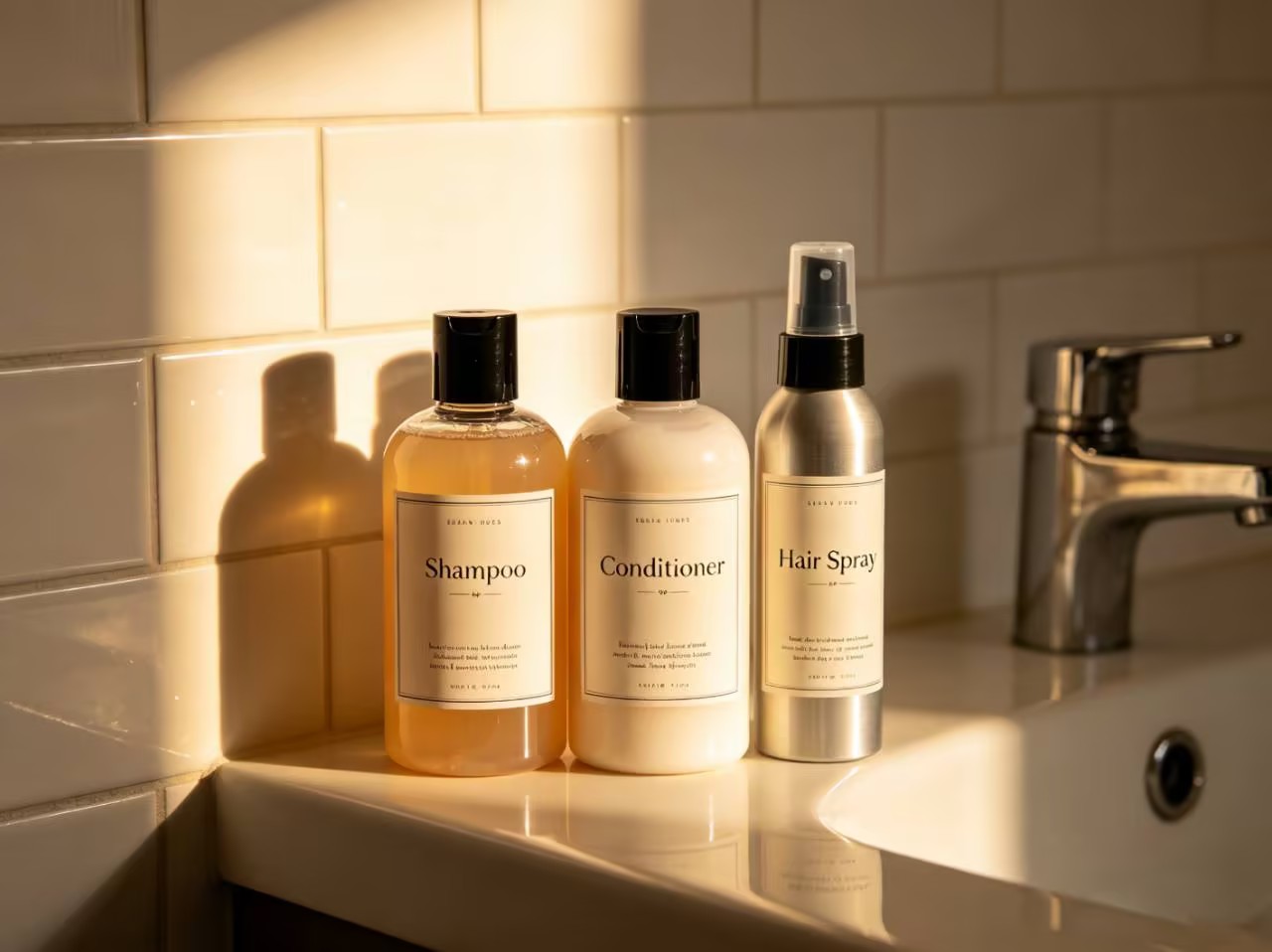
This means that with a 20nm Amodimethicone microemulsion, formulators can develop crystal clear shampoos, conditioners, and hair sprays while still enjoying the smooth conditioning benefits of silicone. This is especially important for premium transparent lines that pursue “clean aesthetics.”
Part 3: No Foam Sacrifice – The Key Balance in Shampoo Formulations
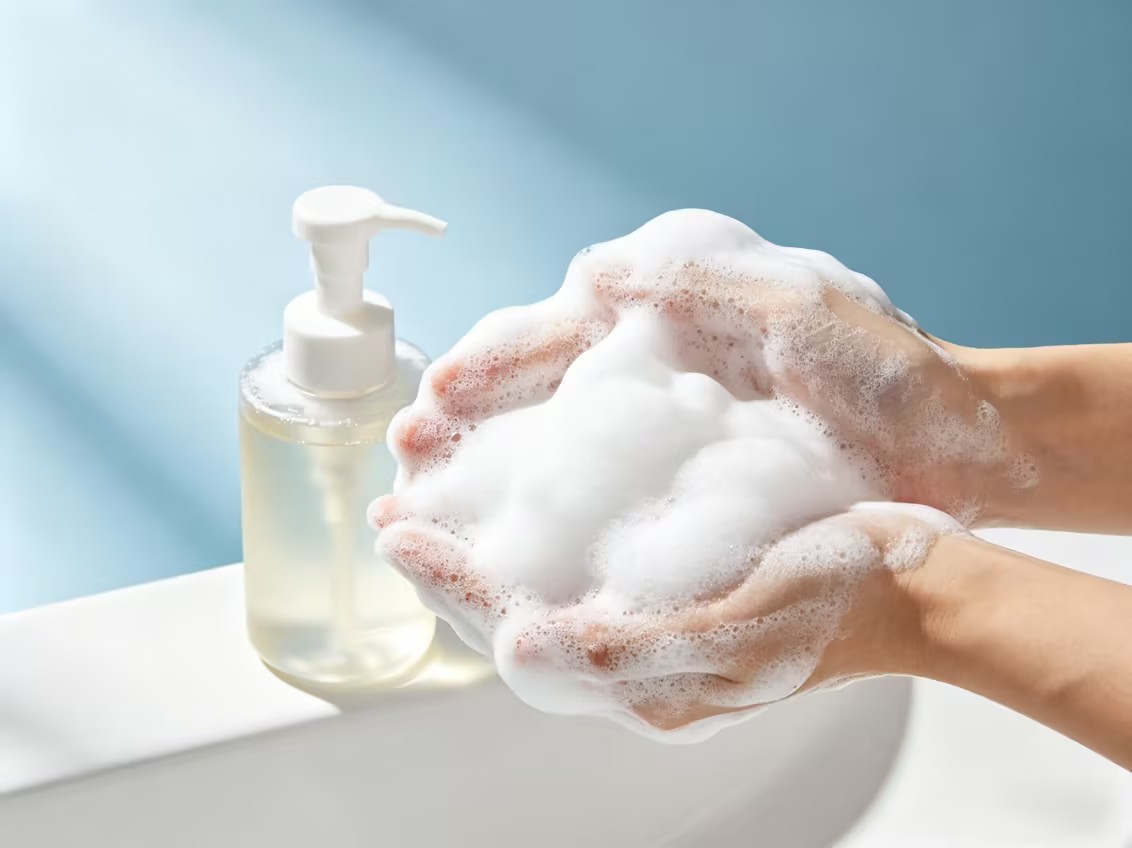
Many conditioning ingredients ,especially cationic polymers and large particle silicones share a common problem: they significantly suppress the foaming ability of surfactants, reducing foam volume and speeding up foam collapse. Yet consumers care a great deal about rich lather in their shampoos.
A high quality Amodimethicone emulsion for shampoo has been shown to have no negative impact on foamability. Why? The 20nm microemulsion droplets disperse quickly and evenly throughout the formula. The silicone mainly deposits onto hair fibers during rinsing, rather than interfering with the air water interfaces needed for foam formation. This means formulators can add sufficient conditioning levels without sacrificing user experience.
Part 4: Performance in Real Applications – From Shampoo to Hair Mask
Based on laboratory tests and real world application feedback, hair care products containing a 20nm Amodimethicone microemulsion perform excellently in the following areas:
Significantly improved dry & wet combability – Even on severely bleached hair tresses, a comb glides through with less breakage and tugging.
Soft, silky feel – Hair is neither greasy nor heavy when dry, retaining natural volume.
Visible gloss– The smooth silicone film reflects light evenly, making hair appear healthier.
Strong affinity for damaged areas– Targeted deposition avoids buildup on healthy hair.
These properties make 20nm Amodimethicone microemulsions suitable for a wide range of categories: conditioning shampoos, conditioners, hair masks, hair sprays, and transparent series products.

Part 5: Beyond the Science – What Do Such Products Look Like on the Market?
Now that we’ve covered the science, you might ask: Are there really Amodimethicone microemulsions on the market that simultaneously meet “20nm,” “10% active content,” “transparent bluish appearance,” “high efficacy on damaged hair,” and “no impact on foam”? The answer is yes.
Take SQ-SE 215 from Shengqing as an example. It is a 10% Amodimethicone emulsion with an average particle size of approximately 20nm, appearing as a transparent to translucent bluish liquid. It effectively improves dry and wet combability, enhances hair softness and gloss, and shows excellent affinity for damaged hair. At the same time, it is clearly noted to have “no influence on foamability” and can be used in clear formulas – meaning it won’t cloud shampoos.
In other words, SQ-SE 215 embodies almost all of the scientific points discussed above: targeted repair from amino silicone, transparency benefits from 20nm microemulsion, foam friendly formulation behavior, and broad applicability from shampoo to hair masks. It is not a “miracle cure,” but it is a well designed, clearly specified conditioning silicone emulsion for hair care.
Part 6: 20nm Amodimethicone Microemulsion – A Reliable Choice for Damaged Hair Care
As consumer demands for hair care products continue to rise, formulators need to strike a balance between “repair power,” “sensory feel,” “transparency,” and “foam performance.” The 20nm Amodimethicone microemulsion offers an elegant solution to these challenges, thanks to its targeted deposition, clarity compatibility, and foam friendly nature.
Whether you are developing a premium salon line clear shampoo or a mass market repair hair mask, this type of ingredient deserves serious consideration. And products like SQ-SE 215, which have been validated in real applications, provide formulators with a ready to reference example – turning theoretical parameters like “20nm,” “10%,” “transparent bluish,” and “no foam impact” into a practical, usable raw material.
On the path of hair care innovation, no single ingredient can solve every problem. But the emergence of 20nm Amodimethicone microemulsion does offer a scientifically sound and practically valuable solution for damaged hair care. It doesn’t shout or steal the show – it won’t kill foam, cloud clear formulas, or weigh hair down. It simply and quietly forms a thin, uniform protective film on damaged areas, making combs glide more smoothly, light reflect more evenly, and post‑wash hair feel softer.
For formulators searching for a conditioning silicone emulsion, understanding the real characteristics of such ingredients is more important than chasing exaggerated claims. A product like SQ-SE 215 may be just one of many options, but the 20nm microemulsion technology and amino‑targeted deposition principle it represents deserve to be known and applied more widely.
We hope this article provides a meaningful reference as you develop your next shampoo, conditioner, or hair mask. After all, a great hair care experience often lies in the invisible details.