

Foam Control in Powder Laundry Detergent? Choose The Right Silicone Anti-Foam Agent Here
Why Does Your Laundry Detergent Foam Like a Bubble Bath? And Why It’s Not Always a Good Thing
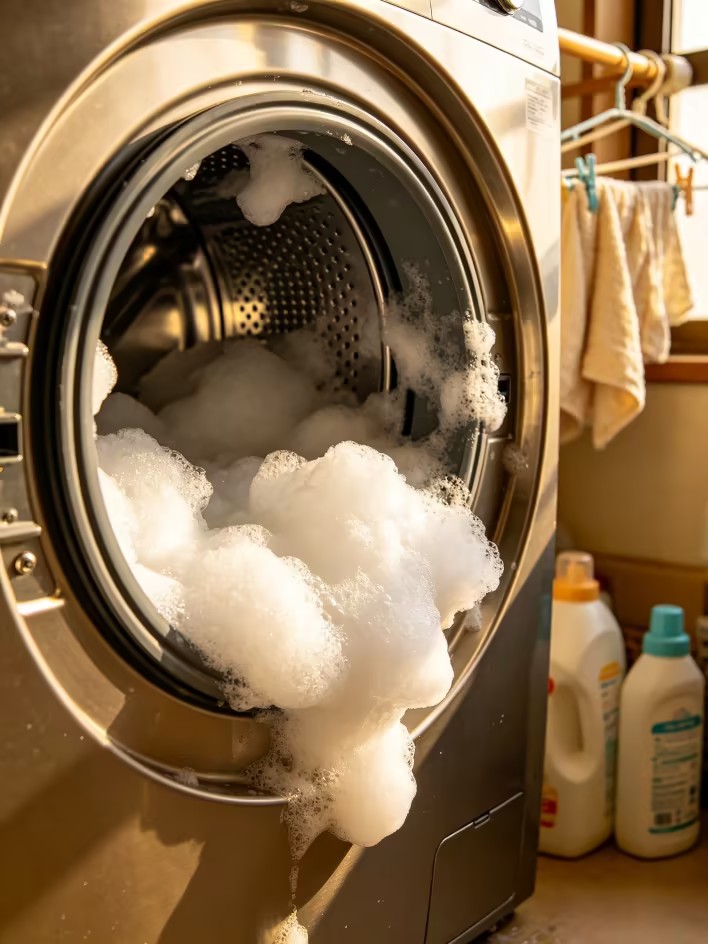
Have you ever opened your washing machine mid-cycle and seen mountains of white foam crawling out like an overgrown snow monster? It looks fun—until water starts leaking from the door, the rinse cycle runs three extra times, and your machine starts making weird buzzing noises. That dramatic foam comes from surfactants in your laundry detergent. Surfactants are the workhorses that lift grease and dirt from fabrics. But here’s the catch: when you use powder detergent in a high-efficiency washer, or when you hand-wash in a small basin, those same surfactants can produce way more foam than you actually need.
In many regions, people still hand-wash clothes or use top-loading machines with limited water. Too much foam means you’ll need endless rinses to get rid of that soapy feeling. In automatic drum washers, excessive foam cushions the mechanical action—so clothes don’t rub against each other properly, and dirt doesn’t get knocked out. Worse, foam can creep into electronic panels and cause short circuits over time. So, the problem isn’t that foam is evil. The problem is that uncontrolled foam wastes water, time, energy, and even your machine.
How Does an Anti-Foam Agent Actually Work?
Think of foam as thousands of tiny soap bubbles stacked together, each stabilized by a thin film of surfactant. An anti-foam agent—especially a silicone-based one—acts like a key that unlocks those films. It spreads across the bubble surface, breaks the surface tension, and pop—the bubble collapses instantly.
But a good defoamer does more than just knock down existing foam. It also prevents new foam from forming for the whole wash cycle. That’s the “anti-foam” part. You want something that stays active in the wash bath, doesn’t get washed away too quickly, and keeps working even when the water is hot or the detergent is strong.
Silicone defoamers are particularly good at this because they have low surface tension and high spreading coefficient.
What Makes a Silicone Anti-Foam Agent “Right” for Powder Laundry Detergent?
Not all defoamers are created equal. Some oil-based ones leave greasy stains on clothes. Some powder defoamers don’t mix well and clump in the detergent box. A well-designed silicone compound for powder detergent needs to check several boxes:
- Easy to incorporate – It should blend into the powder mix without special equipment, or be adsorbable onto common carriers like silicates or carbonates to form a free-flowing solid.
- Stable in storage – Powder detergents often sit on shelves for months. The defoamer shouldn’t lose its punch or cause caking.
- No “silicone spots” – Poorly formulated silicones can leave small, oily dots on fabrics. A good one avoids that.
- Works across surfactant types – Modern detergents mix anionic, nonionic, and even some cationic surfactants. The defoamer needs to handle them all.
Meet SQ-SF 102: A Silicone Antifoam That Delivers Where It Matters
Now, let’s talk about one silicone antifoam compound that’s been quietly doing its job in powder laundry detergents: SQ-SF 102. It’s made from modified polysiloxane, precipitated silica, and a dispersant. That combination gives it two critical abilities: rapid foam knockdown and long-lasting foam suppression. It has the following practical application advantages:
- Killing existing foam
- Keeping foam from coming back
- Working across different detergent bases and washing conditions
- Helping protect washing machines
Instructions for use:1.Direct addition into the powder mix. 2.Add directly during washing.
Application results:
Faster rinse cycles → Because less foam means less water needed to rinse it away.
Cleaner clothes → Without excess foam cushioning, the mechanical agitation works better at lifting dirt.
No visible residue → No silicone spots on dark fabrics, no greasy film on the inside of the machine.
Consistent performance → Batch after batch, shelf month after shelf month.
A Quick Lab Tip: Finding Your Optimal Dosage
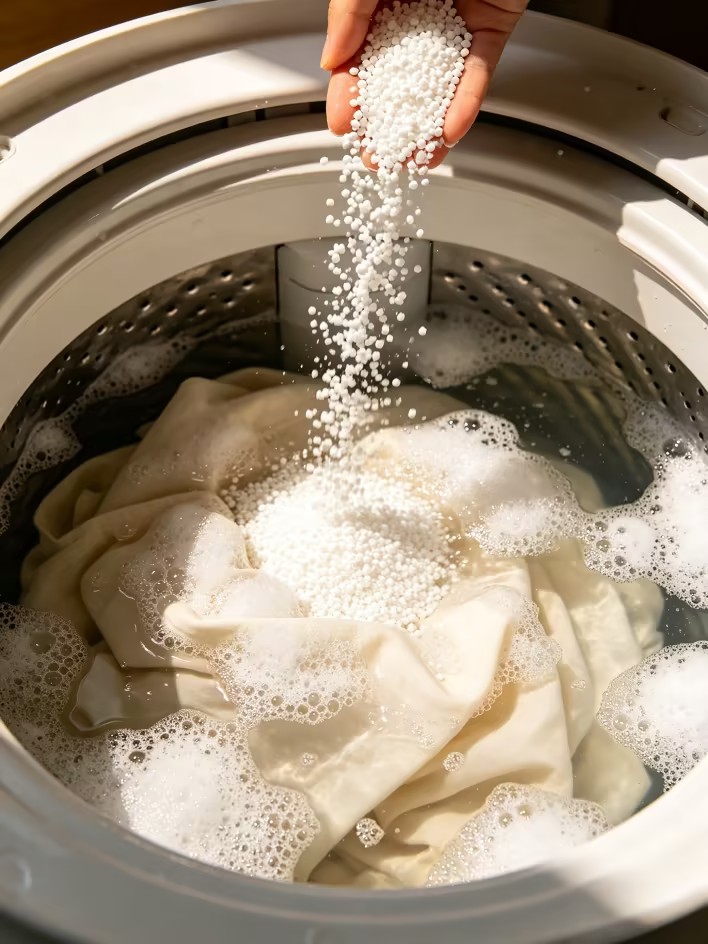
If you’re testing SQ-SF 102 in your own formula, start at the low end. Run a standard wash cycle with your detergent, observe foam height, and check for any residue on fabrics. Increase gradually until foam is controlled but not completely eliminated, because a thin layer of foam is actually helpful for carrying away suspended dirt. Remember: local water hardness, wash temperature, and load size all affect foam behavior. That’s why the manufacturer always recommends customer-specific testing. No two detergent plants are exactly alike. Next time you see a wash cycle drowning in foam, don’t just add more detergent. Think about what’s missing—and choose an antifoam that actually works. Click here for more news about antifoaming agents in daily care industry.
Contact E-mail:sales@sqmaterials.com
Contact Phone:+86 20 3180 1834